

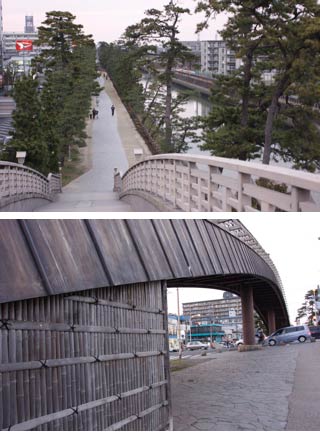
Originally the area directly between Senju and Koshigaya was boggy marshland and travellers ahd to make a wide detour. In 1606, Zusho Okawa of Shuku-shinoha Mura together with other local inhabitants which planted reeds and filled in the swamps. This allowed the road, which until then had made wide detour to the east, to run grasses in the construction of the road that lead to the area being called Soka. The Chinese character for "So" means grass, and "Ka" means add. Following the straightening of the road between Senju and Koshigaya, the Tokugawa Government ordered the establishment of a post town and in 1630 Soka Shuku was established as the 2nd post town on the Nikko Road.
When first established Soka Shuku was small in size with only 84 dwellings, 5 to 6 inns, and one of the each shop selling tofu, salt, oil, rice cakes, rice dumplings as well as a bathhouse and a barber. A census conducted 150 years later in 1843 confirms that post town Soka had grown to a population of 3,619 person and 723 dwellings stretched eave to eave over a distance of 1.3kms. The number of inns had grown to 67 and included one for traveling officials and another for accompanying entourages. Excluding castle towns, Soka had grown to become the 4th largest town on the Nikko Road after, Senju, Koshigaya and Satte.