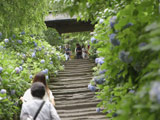
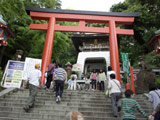
Enoshima Summarized

Get the Flash Player to see this video.

Enoshima Summarized

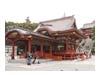
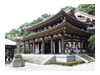
Enoshima (江の島) is a small island, about 4 km in circumference. Adjacent to the closest beach to Tokyo and Yokohama, the island and the nearby coast are the hub of a popular resort area. The street that leads from the Enoden and Monorail Station to the beach has souvenir shops and surfer accessories shops.
tourist Info.
Enoshima is blessed with the abundant beauty of
nature and sea. It's free to enter the island. Also acessible by car.
Access
0. at Kamakura St.
1 use Enoden to Enoshima (24 min.)
2. walk south (10 min.)


MAP
video
Nearest Videos

Detailed Info for Enoshima Summarized:


Enoshima SummarizedEnoshima (江の島) is a small island, about 4 km in circumference. Adjacent to the closest beach to Tokyo and Yokohama, the island and the nearby coast are the hub of a popular resort area. Benzaiten, the goddess of music and entertainment, is also enshrined on the island. Enoshima is the center of Shonan, a resort area along the coast of Sagami Bay known for its scenic beauty.
Enoshima's many sights are concentrated on the island of Enoshima itself, in front of the beach and the modern town. Enoshima is blessed with the abundant beauty of nature and sea.
The street that leads from the Enoden and Monorail Station to the beach has souvenir shops and surfer accessories shops. In the same street you will find a Natural Lawson convenience store.
The street on the island that leads up to the shrine has also the typical souvenir shops, but the real specialities can be found right when you leave the bridge: grilled and fresh seafood in every variation is sold there. It's a bit like the Tokyo fishmarket in small if you look at all those creatures that can apparently be eaten.
Enoshima is all about sea sports, particularly surfing. The surf here isn't actually great by most standards, but it's conveniently close to Tokyo and provides an excuse to strut about with an artificial tan, bleached hair and a surfboard under your arm.
Enoshima has a big yacht harbor. Many cruisers are docked there and many university clubs that have their boats.
Recently, a sailing Olympic week was held there.
The small island of Enoshima is attached to the mainland by a causeway, and during low tide you can walk there on exposed sandbars. In addition to the marina there is a small temple and a modern observation tower on the top of the island. If you are not in great shape for the climb, escalators are available for a fee.
Nature and animals are abundant on the island. The classic view of Mt. Fuji as depicted in Japenese art can be seen from Enoshima on clear days. Giant hawks called tombe fill the skies, squawking and diving.
The island is surrounded by high sea cliffs, rocks and tidal pools. The pounding surf and rocks make swimming at the island rather suicidal but many people walk across the exposed rocks, exploring the tidal pools and crab pots.
Access is on the cliff side of the seawall behind the marina or by going over the top of the island. Both routes are exclusive of each other (see below). If you don't mind getting your feet wet you can (at low tide) go around the island from the side of the causeway opposite the marina and return over the top.
(reference: Wikipedia, Wikitravel)
.

about the area: Kamakura

Kamakura 鎌倉
Terminal Station: JR Kamakura St.
Access from Tokyo
-By Train
0.At Tokyo Station
1.use JR Yokosuka LIne to Kamakura St. (55 min.)
-By Car
1. use Shuto Expressway and change to Yokosuka Expressway to Asahina ex. (52 min.)
2. take route 204 south to Kamakura (20 min.)


Kamakura was the capital of Japan during the Kamakura shogunate, from 1185 to 1333.
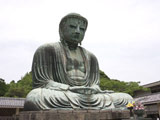
Kamakura is now mainly known for its temples and shrines. Kotoku-in, with the monumental outdoor bronze statue of Amida Buddha, is the most famous of these.
Kamakura is just a little too big to cover on foot, but a network of buses radiates out from the train station. Kotokuin and Hasedera can also be reached by taking the Enoden line three stops out to Hase station.
Nevertheless, for the energetic ones, there is a nice hike starting from the Tokeiji and ending near the Kotokuin. You will walk, with some climbing, through forest. The hike also passes through Zeniarai Benten Shrine, if you are curious about the money washing ceremony. The hike takes about 3 hours, if you also stop and visit the temples along the way. Even in Summer, the shade on the path manages to keep the temperature bearable (you still are in Japan in Summer, anyway!). If you are on a day-trip, doing the hike of course limits a bit the chances of visiting some of the less reachable temples.

all videos for Kamakura

Fireworks at Zushi

July 7 19:45~20:30 Zushi (逗子) is the one of the popular beach around Tokyo area. Its Fire Work Festival has various kinds of fire works including the Starmine Joggling which are th...>>

Fireworks at Kamakura

August 10 19:00~20:15 Kamakura Fire Works is one of the unique Fire Works Festival in Japan. It has Water Fire Works which explode on the water. They create beautiful half ball fir...>>

Kamakura Summarized

Kamakura is one of most popular cities in Japan, with a long and rich history. There are many temples and shrines in the city. Kamakura shows different faces for each season. This ...>>

Sasuke Inari Shrine

Sasukeinarijinja (佐助稲荷神社) There is nice tunnel of many Toriis which are the gateway at the entrance to a Shinto shrine. It was built in the celebration of the Yoritomo's(The first ...>>

Enoshima Summarized

Enoshima (江の島) is a small island, about 4 km in circumference. Adjacent to the closest beach to Tokyo and Yokohama, the island and the nearby coast are the hub of a popular resort ...>>

Kamakura Daibutsu

Kotoku-in (高徳院) is a Buddhist temple of the Pure Land sect in the city of Kamakura in Kanagawa Prefecture, Japan. The temple is renowned for the Great Buddha (大仏, daibutsu), a mo...>>

Tokeiji

The Shokozan Tokei-ji (松岡山東慶寺), also known as Kakekomi- dera (駆け込み寺) or Enkiri-dera (縁切り寺), is a Buddhist temple in the city of Kamakura in Kanagawa Prefecture, Japan....>>

Genjiyama Park

Genjiyama Park (源氏山公園, Genjiyamakouen) is small mountain park located west side of Kamakura Station. There is Minamoto no Yoritomo (源頼朝) Stature who is the first Shogun who start...>>

Hongakuji Temple

Hongakuji (本覚寺) is one of Nichiren Buddhism temples in Japan. It was built by Mochiuji Asikaga (足利持氏) at 1436. Before he build the temple, in 1274, Nichiren (日蓮) stayed Ebisudo ...>>

Joeiji Temple

Joeiji (常栄寺) is also known as Botamochi Temple. The original temple was built around 13th century named after Myojyonichiei (妙常日栄). When Nichiren prosecuted by Buddhism because h...>>

Myohonji Temple

Myohonji (妙本寺) is one of the Nichiren Buddhism temple which built at 1260. It was built for holding a memorial service for Nichiren and Hiki family. Main Temple is one of the tal...>>

Hokokuji Temple

Hokokuji (報国寺) temple was founded by the priest Butsujo Zenji who studied under the tenowned Buddhist priest Mugaku Sogen (1226-1286) when he was thirteen years old....>>

Shakado Kiritoshi

Syakado Kiritoshi (釈迦堂切通し) is one of the historical and great nature monument in Kamakura. It was build around 1200 by cutting and digging small rock valley for transportation....>>
Sugimotoji Temple

Sugimoto temple is the oldest temple in Kamakura which built at 734. In 1189, 3 buddha statue were protected by Japanese cedar from house fire. After that, temple was called Sugi...>>

Copy right © 2007-2008 all rights reserved.